
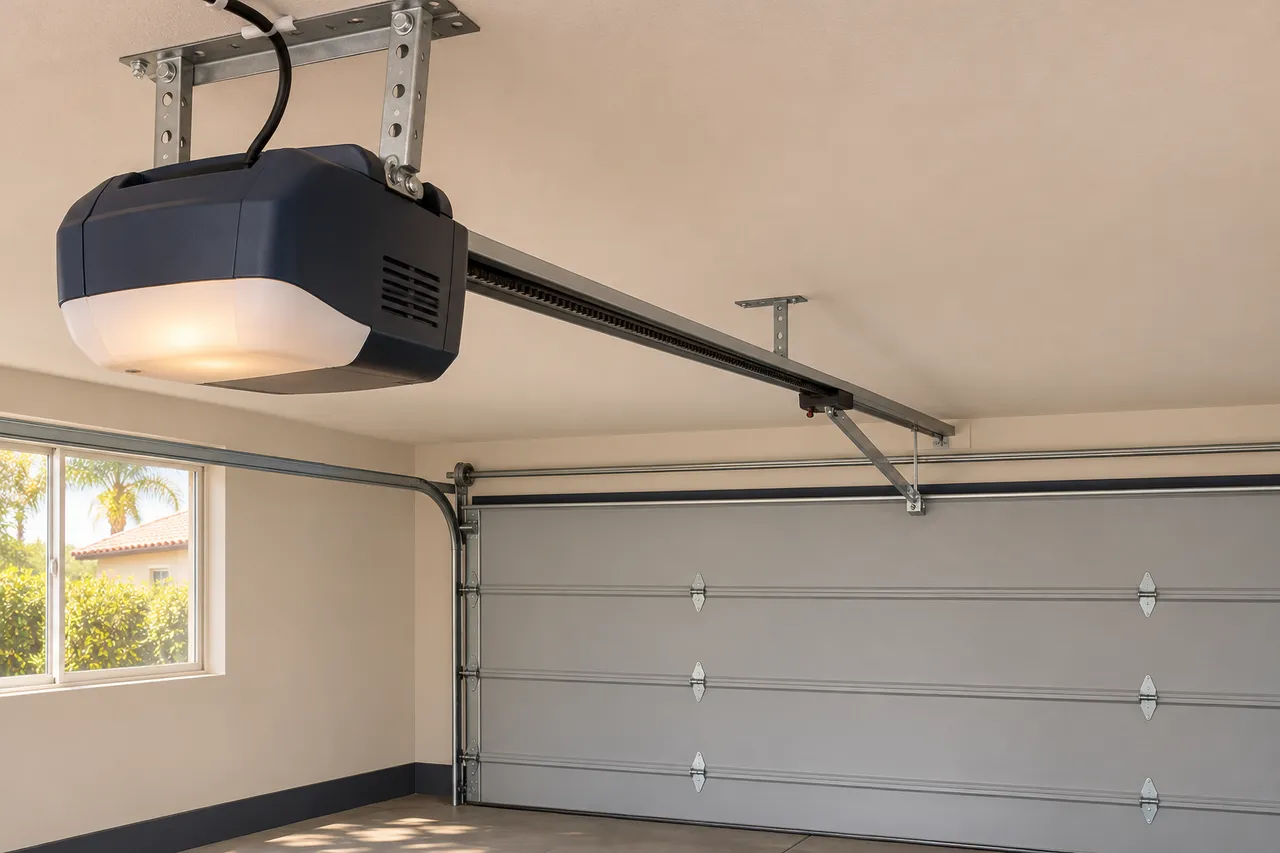
Separate the controls from the movement of the door
A remote that does nothing when the wall button still works gives a different starting point from a motor that runs without moving the door. At LockReach Locksmith Thousand Oaks, an opener repair call starts with the controls you normally use and the last thing the door did. A keypad by the driveway, two remotes and an inside wall control provide different clues when only one of them fails.
Tell us if the opener lights came on or if the motor made a sound. If the door traveled part of the way, describe where it stopped or reversed. You don’t have to repeat the movement, particularly when the door looks crooked or something is in its way. A description of that first failed trip is enough to start asking the right questions.
Explain what stopped working and when
A homeowner might notice a remote working only up close, then a week later find that the second remote works from the driveway as usual. In that situation it matters that the issue is limited to one control. If both remotes and the wall button fail at the same time, say whether any indicator lights are still on. Those observations help narrow what needs to be checked.
A brief power outage, a new vehicle with built-in controls or changes to a home network can be useful context. Mention them without assuming they caused the problem. If the opener is connected to an app and the wall control works, distinguish the connection issue from the actual door movement. If the garage has more than one opener, say which door is affected and check which button you normally use for it.
Read the model information if the label is easy to see from where you already stand. If it isn’t accessible without a ladder, moving the door or leaning into the mechanism, skip it for the first call. An approximate age and what controls it uses are often enough to describe which setup you have.
Write down the last symptoms you noticed
Share what happened during ordinary use. Skip any attempt to repeat a failure on a damaged or unstable door.
- Which wall button, remote, keypad or app sent the last command.
- Whether the opener made a sound or its lights reacted.
- Where the door stopped or reversed, if it moved at all.
- Whether the problem appeared after a change, a power outage or an impact.
Account for the door before you replace the motor
The opener and its rail move the door, while the door hardware and balance system affect how easily the door travels. A door that binds or sits visibly unevenly may be causing trouble for the motor. Ask how the technician determines whether the drive system is at fault or the door needs attention first. When a door looks unstable, leave it out of use.
Many openers use photoelectric sensors to help detect an obstruction near the opening. If a door starts down and reverses, describe exactly where that happens and whether anything recently changed by the opening. Don’t bypass a safety device to keep the door working. Bring up an intermittent reversal even if the opener normally seems fine.
Make a short handover note for other drivers
If you replace a control that several people depend on, show them which button or keypad now operates the door. Keep the model information and paperwork from the visit somewhere you can find it. The next time something changes, you can identify the control and say which parts of the system were serviced.
If a door has started stopping at the same spot, share which direction it was moving and what you heard as it reached that point. Giving the technician those details can keep the discussion about controls from overlooking how the door moves. Describe the earlier trips you already witnessed instead of running a door with visible damage.
Compare a repair with a replacement you could live with
When the estimate calls for an opener repair, ask which observation supports the diagnosis and whether the door itself is expected to work normally after the repair. If replacement is being discussed, ask whether the existing door hardware and controls can remain in use. People who rely on a keypad or a built-in vehicle control should bring that up before choosing a replacement system.
Which functions matter most to your household can be more practical than a long list of features. For an opener under a room where people sleep, sound may influence the decision. For a garage used by several drivers, the important issue may be how many controls work with it and whether there’s a straightforward way to use it when the usual remote is elsewhere.
At the handover, ask what was checked about normal travel and safety reversal. If the visit addressed only a failed remote or control, test the functions you intend to use with the technician when it is safe to do so. If the door still shows a new symptom, describe it before assuming it is part of the original repair.
When calling from Thousand Oaks or the nearby service areas, give the location, which control responds and the last movement you saw. That makes it easier to discuss an opener repair even when you don’t know the name of the part.