
Start with the entrances people actually use
When a house changes hands, the key ring from the previous owner rarely tells the whole story. Start with the door you’ll use when carrying groceries or coming home after dark. Check the side entrance and the door into the laundry room or garage. If you call LockReach Locksmith Thousand Oaks for a residential locksmith in Thousand Oaks, explain how people will use those entrances. That tells us more than counting the locks from the curb.
In Newbury Park, you might enter from the driveway long before you use the front step. If the pedestrian door beside the garage needs a different key, include it in the conversation about access. The overhead garage door and its controls are a separate system. Keep that on a separate list so the decisions about your house keys stay easy to follow.
Choose between changing the key and changing the hardware
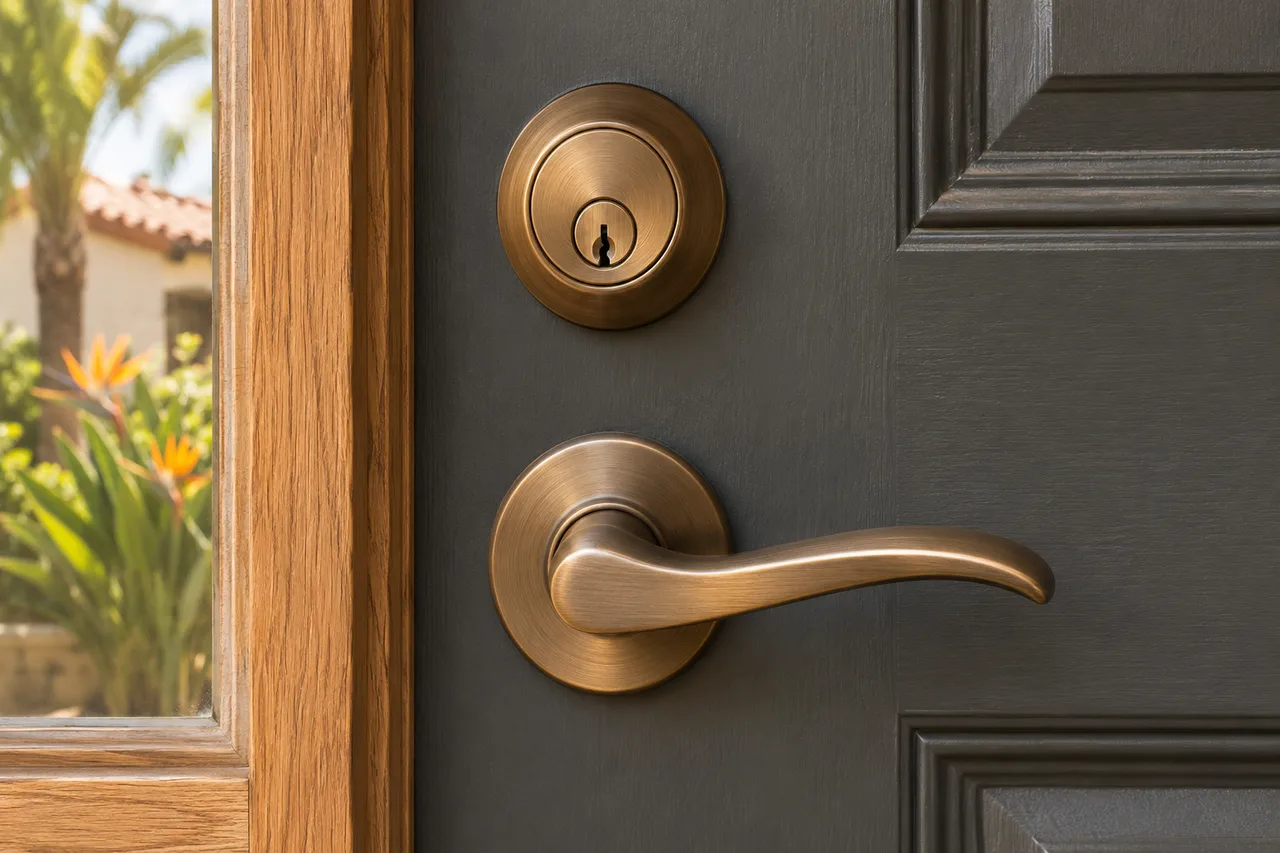
Rekeying changes which key operates a compatible lock. It can make sense when the handle and cylinder are in good condition but someone previously had a key you no longer want to work. If the lever is loose, the bolt is unreliable or you want to change how the lock works, discuss that too. Keeping an attractive modern or original handle is often a question of fit and condition.
A lock that occasionally feels gritty may need a different conversation from a bolt that only works when you press the door into the frame. Tell us which way the door moves and where it rubs. If work has recently been done on the frame, floor or weather seal, share that history. It can help explain why a key still turns in one position but not another.
If you already bought replacement hardware, give the brand and model when you call. Ask whether an existing opening can take it and what would need to be checked. An exterior lever, a deadbolt and a decorative interior handle serve different purposes. Knowing which part you want to change helps the visit focus on the result you want.
Make a door list before a move-in appointment
Walk the property in the order you normally move through it. Add what feels different at each entrance, along with any people who should have access.
- Record the front, side and pedestrian garage entrances that need a house key.
- Put any loose, bent or unlabeled spare keys aside so you can account for them.
- Note when a latch catches only if you lift, pull or push the door.
- Decide whether a utility space or detached building needs its own key.
Keep the entrance comfortable to use
For a home around Dos Vientos, keeping the existing trim can be as important as changing the keys. Tell us whether the handle or finish matters to you and who uses it most often. A lever that a family member can grasp easily may be worth preserving. Bring up a tight interior clearance or a storm door that sits close to the handle so those practical constraints get considered.
Think about guests or family members who visit occasionally. A single key can be convenient when the cylinders are compatible. A different key can make sense for a detached space that somebody needs occasionally. If you’re choosing an electronic lock, ask about how residents will enter when a battery is low and what the physical key, if present, can still do.
Separate a tenant’s door from common access
If you’re renting a unit, talk to the owner or property manager before changing locks. Clarify which entrance belongs to the unit and which is part of a shared courtyard, lobby or building. A request to update your private key can be different from changing a key used by the entire building. Have a contact who can answer questions about permission when the work is arranged.
For a townhome or condo, identify which driveway or walkway leads to the unit and whether someone must meet at a shared entry. Around Hillcrest Drive, a street address alone might lead someone to a leasing office or another building. Give the building and unit number and say where you’ll be waiting. If the visitor entrance has different access from the resident lot, mention that before the visit.
Decide how people will receive the new keys
Planning the handover helps when several people use a home at different times of day. A resident may be at work while the door is being rekeyed, or a relative may only come in through a side entrance. List who needs a new key immediately and agree on where they will meet you. A label that names the door is better than a key ring that leaves everyone guessing which lock was changed.
On an entry that was updated at different times, the inside trim, exterior handle and cylinder may belong to separate sets. Bring that up if you have a strong preference about what to keep. A photo of both sides can explain the combination if you are asked for one. Ask which part has to be examined on the door before you choose between repairing one piece and replacing the assembly.
Review which keys will work before you close the door
When you discuss a proposed change, ask which locks it will affect, how many keys are included and whether the previous key will still work anywhere. If your door list includes a handle that gives trouble, have the quote explain whether the visit includes addressing that hardware. It’s easier to approve the right work when you can connect a line in the estimate to a door you recognize.
After a rekey or repair, ask to see which key is meant for which entrance. Make a place for the spare you intend to use, and hand out keys according to the list you made. If the lock feels different from expected or the door needs pressure to latch, go through the door list again while the details of the visit are fresh.
For a home in Thousand Oaks or one of the nearby service areas, call with the door you use every day, what you want to change and what you would like to keep. Even a short list of two entrances and one troublesome lock gives us a practical place to start.